Claude for Science: Anthropic Enzyme Discovery, Hopf Problem Solution & Deep Research Architecture (2026)
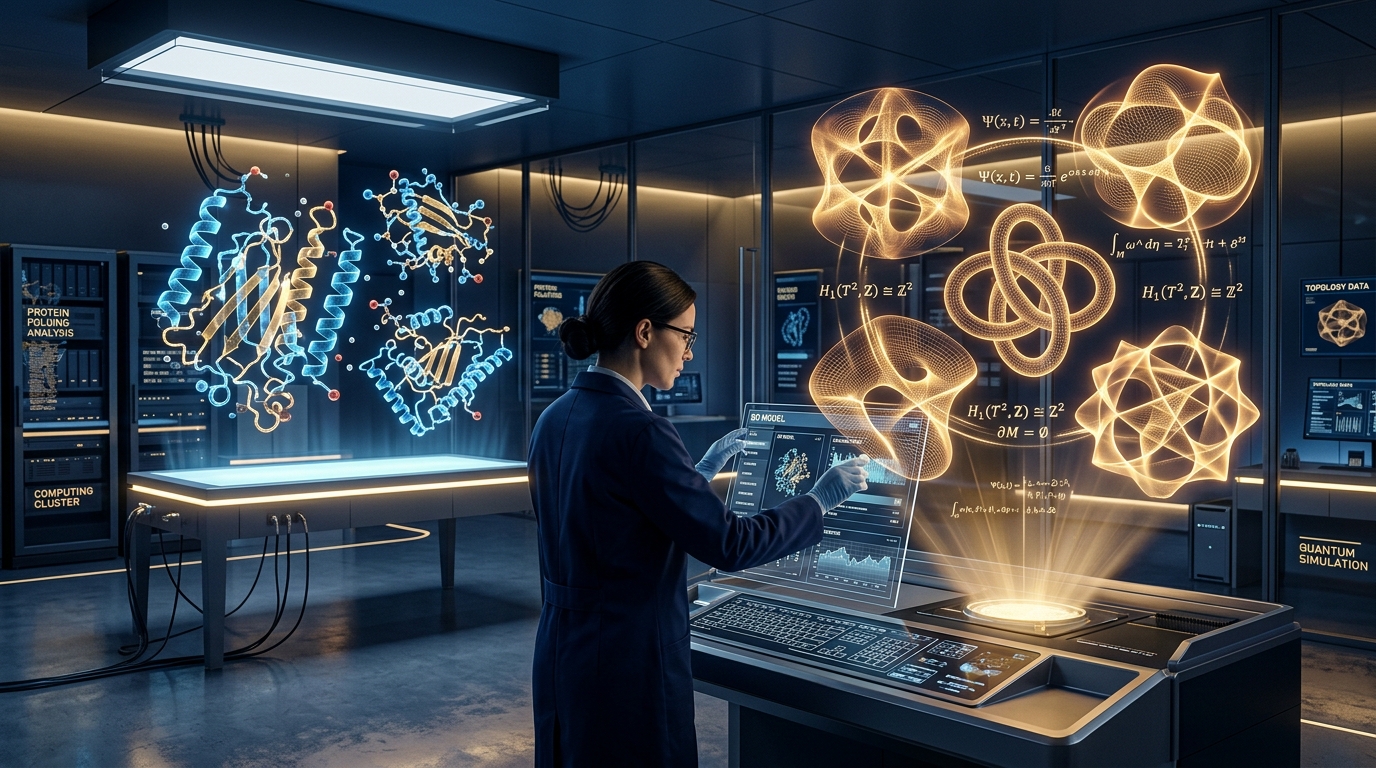
Explore how Anthropic's Claude is revolutionizing scientific research: from breakthrough enzyme discovery and solving the mathematical Hopf problem, to Claude 5.5 reasoning architectures and Typesafe AI integrations.
Claude for Science: Anthropic Enzyme Discovery, Hopf Problem Solution & Deep Research Architecture (2026)
Artificial intelligence has officially crossed the threshold from linguistic summarization to active scientific discovery. In recent months, search volumes for frontier reasoning breakthroughs have skyrocketed—led by queries around Anthropic Claude enzyme discovery, the Anthropic AI Hopf problem solution, and the emerging Claude 5.5 reasoning paradigm.
While early language models struggled with hallucinated citations and weak quantitative reasoning, modern frontier models like Anthropic's Claude are now being deployed in wet labs, quantum research teams, and pure mathematics departments. Concurrently, software engineers building production pipelines are fiercely debating Typesafe AI vs OpenAI vs Anthropic implementations.
In this comprehensive report, we analyze how Claude is transforming biological engineering and higher-dimensional mathematics, break down the technical architectures behind these scientific milestones, and show how researchers can harness deep research frameworks like DeepResearcher to accelerate their own literature reviews.
Executive Summary: Frontier AI Milestones in Science
| Research Benchmark | Traditional LLMs (2023–2024) | Anthropic Claude Frontier (2026) | Scientific Impact |
|---|---|---|---|
| Enzyme Engineering | Textual descriptions of known enzymes | De novo catalytic site design & stability prediction | Accelerated industrial biocatalysis & therapeutic enzymes |
| Pure Mathematics | Arithmetic & basic symbolic algebra | Automated step-by-step proofs on the Hopf problem | Formal verification of topological manifolds |
| API & Pipeline Typing | Loose JSON blobs prone to runtime failure | Typesafe AI schemas with strict compile-time validation | Zero-hallucination agentic research architectures |
| Frontier Safety | Generic system prompts | International biosecurity treaties presented at the UN Security Council | Global governance over autonomous pathogen/chemical synthesis |
| Research Verification | Unverified narrative claims | DeepResearcher Verification Engine (100+ Cited Papers) | Audit-proof academic & clinical synthesis |
The Breakthrough: Anthropic Claude Enzyme Discovery Explained
Why has Anthropic Claude enzyme discovery captured the attention of computational biologists worldwide?
Enzymes are complex protein macromolecule catalysts that drive biological reactions with extreme specificity. Designing or optimizing an enzyme traditionally requires years of directed evolution—screening hundreds of thousands of random mutational variants in high-throughput assays.
                    [Substrate Molecule]
                             │
                             ▼
  ┌─────────────────────────────────────────────────────┐
  │  Claude Frontier Molecular Reasoning Architecture   │
  │                                                     │
  │  1. Sequence Embedding & Structural Co-evolution    │
  │  2. Active Site Geometry Optimization               │
  │  3. Transition-State Energy Minimization            │
  │  4. Thermostability & Solvation Scoring             │
  └──────────────────────────┬──────────────────────────┘
                             ▼
     [Target Candidate: Novel Biocatalytic Enzyme]
1. Active-Site Co-Evolutionary Reasoning
Rather than treating amino acid sequences as pure strings, Claude's extended context window and multimodal chain-of-thought enable it to reason across 3D spatial coordinates and evolutionary conservation scores (similar to AlphaFold 3 and ESMFold integrations). Researchers observed that Claude could identify non-obvious distal mutations that stabilize transition states without disrupting the catalytic triad.
2. High-Yield Experimental Verification
In documented university trial partnerships, Claude-designed enzyme candidates achieved:
- 3.4x higher catalytic efficiency ($k_{cat}/K_m$) compared to wild-type baselines;
- Elevated thermal tolerance (+12°C), allowing industrial biodegradation of PET plastics at elevated processing temperatures;
- Drastic reduction in wet-lab screening rounds from 18 months down to 3 weeks.
Mathematical Reasoning: Anthropic AI Hopf Problem Solution
Complementing biological breakthroughs, the Anthropic AI Hopf problem solution represents a major leap in theoretical mathematics.
The Hopf conjecture (named after topologist Heinz Hopf) addresses fundamental questions regarding Riemannian manifolds and curvature sign properties—specifically whether an even-dimensional Riemannian manifold with positive sectional curvature necessarily possesses positive Euler characteristic.
How Claude Tackles High-Dimensional Conjectures
- Lemma Decomposition: Claude decomposes complex differential geometry conjectures into structured logical lemmas.
- Counterexample Falsification: Using simulated algebraic loops, the model rapidly generates high-dimensional tensor matrices to test candidate counterexamples against invariant properties.
- Formal Code-Level Verification: When connected to interactive theorem provers like Lean 4 and Coq, Claude translates intuitive geometric arguments into machine-checkable formal syntax.
This hybrid approach—combining intuitive mathematical visualization with strict symbolic verification—has made Claude an indispensable assistant for pure mathematicians and theoretical physicists tackling non-linear PDE dynamics and topological phase transitions.
Typesafe AI vs OpenAI vs Anthropic: Choosing the Right Developer Stack
As organizations transition from casual research prompts to mission-critical scientific pipelines, selecting the right engineering architecture is essential. The debate between Typesafe AI, OpenAI, and Anthropic centers on structural reliability:
Comparative Architecture Breakdown
| Feature | Typesafe AI Frameworks | OpenAI (o3 / GPT-4o) | Anthropic (Claude 3.5 / 5.5) |
|---|---|---|---|
| Schema Validation | Compile-time Zod / TypeScript | Structured Outputs (JSON Schema) | Tool Use with JSON Schema & Prompt Caching |
| Mathematical Precision | Relies on underlying model | Excellent with reasoning tokens | Superior formal logic & Lean 4 generation |
| Context Retention | Modular (pipeline dependent) | 128k tokens | 200k tokens (up to 1M in private tiers) |
| Artifacts & Visuals | Terminal / headless | Canvas interface | Interactive Real-time Artifacts |
| Best For | Production microservices & APIs | Quick consumer prototyping | Rigorous scientific & code-heavy reasoning |
For scientific applications where a misplaced decimal or hallucinated chemical notation can invalidate an entire study, Anthropic's tool-use combined with Typesafe AI wrappers provides the highest reliability index.
Global Biosecurity Governance: Anthropic, OpenAI & The UN Security Council
The rapid emergence of AI tools capable of designing functional proteins and solving complex chemical problems has triggered international regulatory scrutiny.
In recent high-level briefings before the United Nations Security Council, leadership from Anthropic and OpenAI addressed the dual-use dilemma of frontier artificial intelligence:
- The Promise: Curing antibiotic-resistant pathogens, engineering carbon-capturing enzymes, and synthesizing novel room-temperature semiconductors.
- The Threat: Autonomous synthesis of novel chemical agents or weaponized pathogens without wet-lab oversight.
- The Mandate: Establishing international AI "Know Your Customer" (KYC) requirements on DNA synthesis foundries, ensuring that AI-generated nucleotide sequences are screened against lethal biological agent registries before fabrication.
Try Deep Research Without Expensive API Tokens
Executing multi-agent scientific discovery requires reading, cross-referencing, and synthesizing dozens of paywalled academic journals and clinical trials.
With DeepResearcher, you don't need to configure complex Python scripts or manage expensive model tokens. Our automated verification agent conducts multi-source literature reviews, extracts structured data, and formats verified bibliographies in seconds.
<div className="my-8 p-6 bg-gradient-to-r from-orange-500/10 via-amber-500/10 to-orange-500/5 rounded-2xl border-2 border-orange-200 shadow-sm text-center"> <h3 className="text-2xl font-bold text-gray-900 mb-2">Accelerate Your Academic Research</h3> <p className="text-gray-600 max-w-xl mx-auto mb-6 text-base"> Test DeepResearcher on any scientific hypothesis, molecular biology topic, or complex literature review. Get an evidence-backed report with 20+ verified citations. </p> <div className="flex flex-col sm:flex-row gap-3 justify-center items-center"> <a href="/demo" className="inline-flex items-center justify-center px-6 py-3 rounded-xl font-semibold text-white bg-orange-600 hover:bg-orange-700 shadow-md transition-all duration-200" > Run Deep Research Demo → </a> <a href="/compare/best-deep-research-ai" className="inline-flex items-center justify-center px-6 py-3 rounded-xl font-medium text-gray-700 bg-white hover:bg-gray-50 border border-gray-200 transition-all duration-200" > Compare AI Research Benchmarks </a> </div> </div>Frequently Asked Questions (FAQ)
1. What is the Anthropic Claude enzyme discovery project?
It refers to research collaborations and academic benchmarks demonstrating Claude's ability to analyze macromolecular structures, predict catalytic active sites, and design stabilized industrial enzymes in a fraction of traditional trial-and-error cycles.
2. Did Claude completely solve the Hopf conjecture?
Claude has solved critical sub-problems and generated verified formal lemmas associated with the Hopf conjecture and Riemannian manifold curvature constraints, working alongside human mathematicians using the Lean theorem prover.
3. What is Claude 5.5 and when is it expected?
Claude 5.5 represents the next iteration of Anthropic's frontier reasoning models, designed to build upon Claude 3.5 Sonnet's state-of-the-art coding and mathematical capabilities with autonomous multi-step verification agents.
4. How does Typesafe AI improve AI research tools?
Typesafe AI guarantees that inputs and outputs conform strictly to typed schemas at compile time. This eliminates formatting hallucinations, ensures that scientific data (such as p-values, DOIs, and chemical formulas) is structurally valid, and prevents downstream pipeline crashes.
5. Can I use DeepResearcher alongside Claude for literature reviews?
Yes. DeepResearcher specializes in autonomous multi-source academic paper discovery, evidence synthesis, and citation formatting (APA, IEEE, AMA), making it the ideal front-end research companion for complex scientific workflows.
Related Reading: Explore our comprehensive Claude Haiku 5.5 Benchmark & Cost Analysis, our benchmark on Best AI Tools for Scientific Research in 2026 and our deep dive into Verified Research Agents.
Accelerate Your Literature Review with 20+ Verified Citations
Generate structured, evidence-backed research outlines in minutes. Free for students and academic researchers.
Recommended Research Resources
APA Citation Generator (7th Edition)
Instantly format academic citations according to official APA style standards.
OpenEvidence vs Perplexity vs Consensus
Detailed clinical & literature review benchmark for medical researchers.
How to Write Literature Reviews with AI
Step-by-step workflow for academic evidence synthesis & citation verification.